
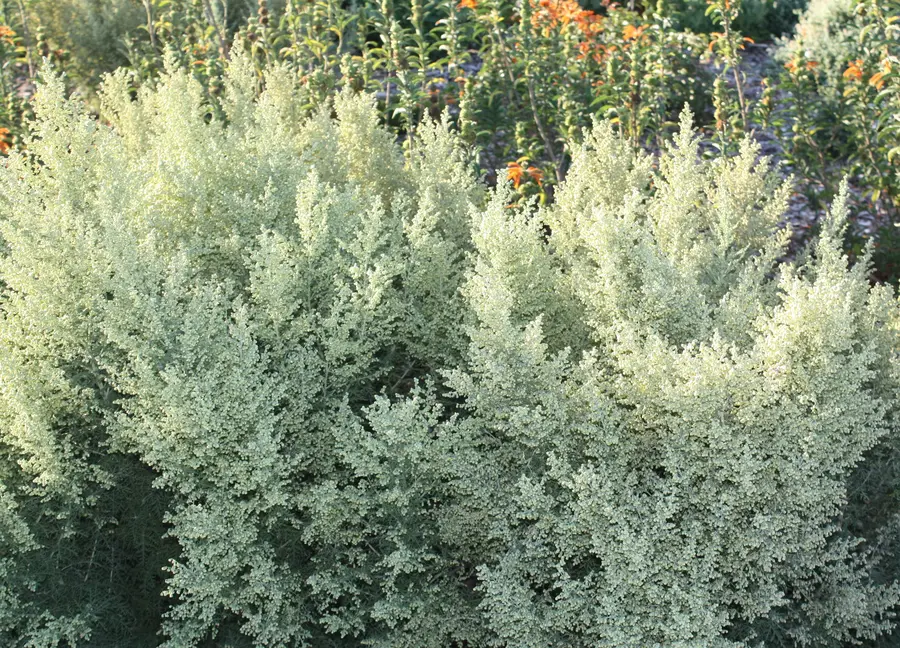

Identity & plant part
African wormwood has soft, finely divided foliage and a strong aroma. Names recorded by SANBI include wilde-als, umhlonyane and lengana. It is distinct from Artemisia annua; species identity matters in any comparison of research. [Sources]
Traditional knowledge
Traditional accounts describe leaf preparations for respiratory complaints and other ailments. These records reflect community knowledge and patterns of use; they are not evidence that the plant cures infection. [Sources]
How the medicine is extracted
Water preparations recover water-soluble constituents. Distillation of aerial parts instead collects volatile oil, leaving most non-volatile components behind. The UWC/SANBI monograph describes substantial variation in the oil. A distilled oil and a tea therefore cannot be treated as chemically equivalent. [Sources]
Scientific evidence & limitations
The monograph reports antimicrobial activity in laboratory testing. Such experiments measure activity under controlled conditions and do not show that drinking an infusion will treat a person. Plant provenance, chemical profile, extract concentration and the test organism all affect interpretation. [Sources]
Safety & suitability
Do not replace malaria, tuberculosis or other infection treatment with this plant. Concentrated essential oil is not suitable for casual ingestion; pregnancy and use in children need professional guidance. [Sources]
Conservation & knowledge holders
Cultivation and documented sourcing help preserve local knowledge and reduce pressure on wild populations. [Sources]
Sources & credits
- SANBI PlantZAfrica — Artemisia afra
- Scott & Springfield, UWC/SAMRC — Artemisia afra medicinal monograph
Video resources
KTN News Kenya: KEMRI medicinal-plant research (23 March 2026). This is related research news, not a demonstration for this species.
Search YouTube for Artemisia afra. These search results are uncurated; check identity, credentials and evidence before relying on a video.