
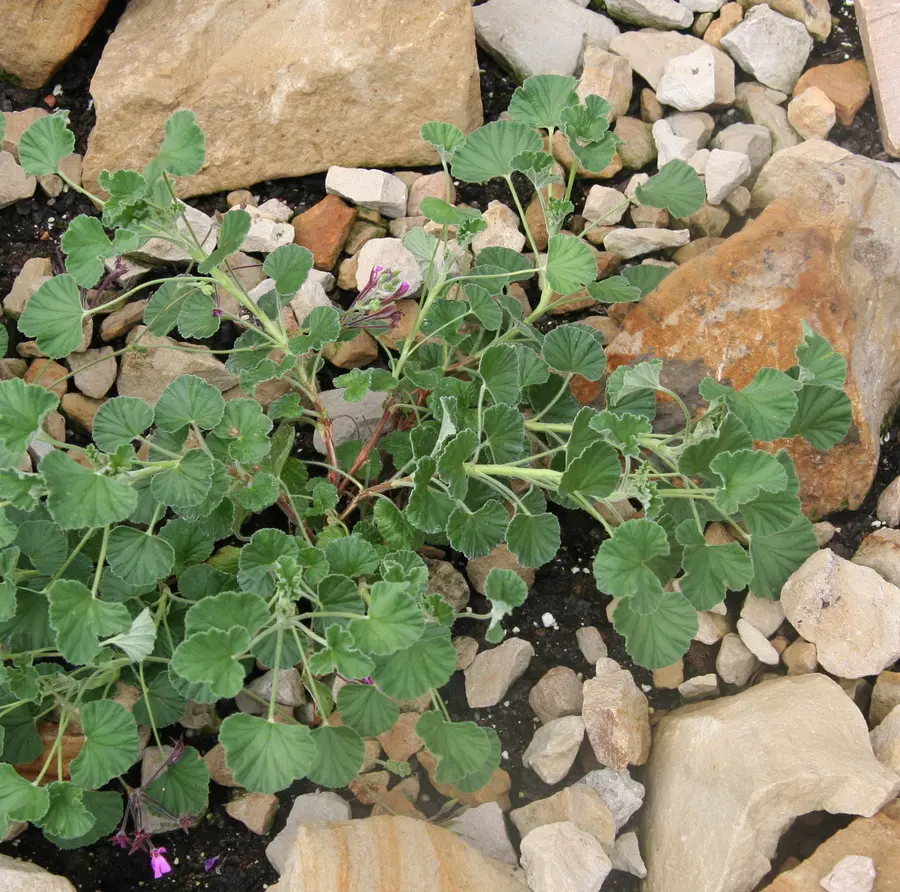

Identity & plant part
A small perennial with rounded, soft leaves and dark flowers. The medicinal root is associated with southern African traditional practice. Pelargonium sidoides and Pelargonium reniforme are related species covered in the EMA assessment; ornamental scented geraniums are not automatic substitutes. [Sources]
Traditional knowledge
The root has a documented history of use for respiratory symptoms. Modern products commonly use a defined extract rather than a simple household preparation. [Sources]
How the medicine is extracted
Controlled manufacture uses a specified ethanol-and-water solvent to dissolve constituents from authenticated root. The extract is separated from the plant solids and may be concentrated or dried. The EMA monograph defines particular preparations and extraction ratios. Matching the species alone is not enough to reproduce them. [Sources]
Scientific evidence & limitations
The EMA framework supports traditional use of specified preparations for common-cold symptoms. Clinical studies do not justify treating every pelargonium product as equivalent. Symptoms improving in an extract trial do not establish treatment for pneumonia or another serious infection. [Sources]
Safety & suitability
Persistent fever, breathing difficulty or worsening symptoms need medical assessment. Check the actual product leaflet for age limits, contraindications and possible adverse effects. [Sources]
Conservation & knowledge holders
Root removal is destructive. Traceable cultivation and managed harvesting matter for a product supplied at scale. [Sources]
Sources & credits
Video resources
KTN News Kenya: KEMRI medicinal-plant research (23 March 2026). This is related research news, not a demonstration for this species.
Search YouTube for Pelargonium sidoides. These search results are uncurated; check identity, credentials and evidence before relying on a video.